



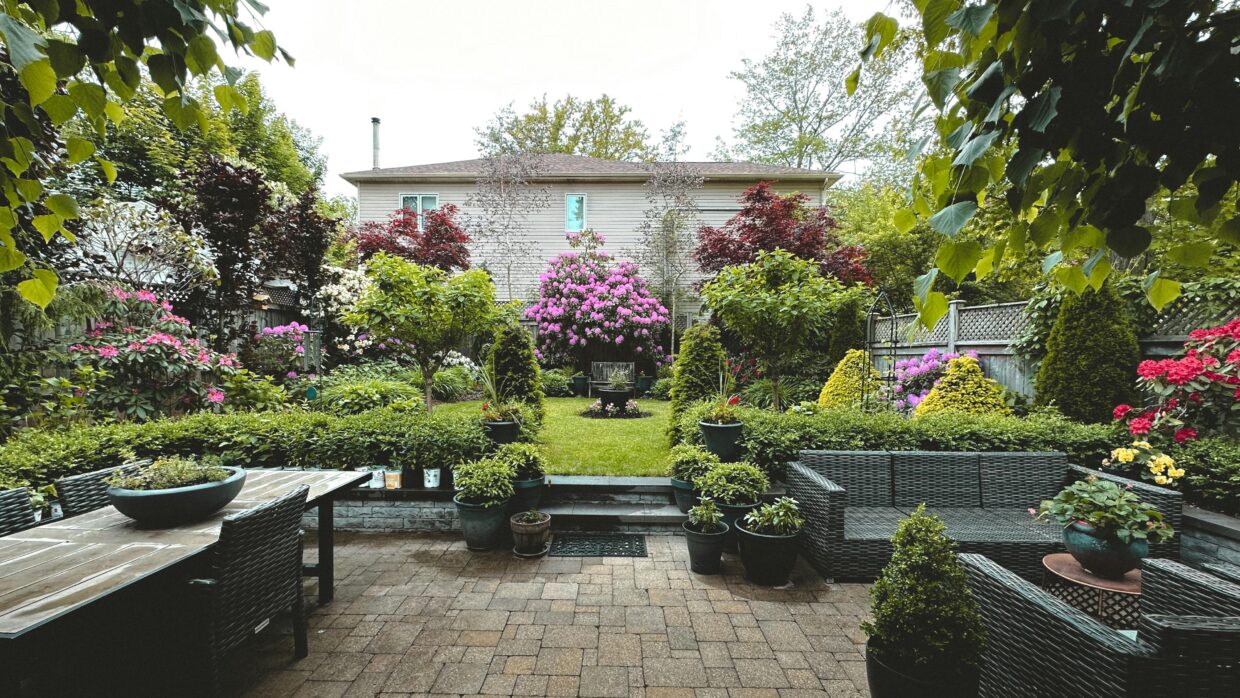
If your property has any degree of slope, a retaining wall is likely the most important structural element in your landscape. While their primary job is to hold back earth and prevent erosion, a well-designed retaining wall can transform a steep, unusable hill into a series of beautiful, functional terraces. In 2026, we view these walls as “vertical hardscaping”—an opportunity to add texture, lighting, and seating to the garden while ensuring the long-term stability of the property’s terrain.
The Physics of Soil Pressure and Drainage
The failure of a retaining wall is almost always caused by one thing: water pressure. Wet soil is incredibly heavy, and without proper drainage, that “hydrostatic pressure” will eventually push even the strongest wall forward. At TopHomeServics, our 2026 engineering standards require a dedicated drainage zone behind every wall, consisting of clean crushed stone and perforated “weep holes” or drain pipes. This ensures that water is channeled away before it can build up pressure. For walls over three feet in height, we also utilize “geogrid”—a high-strength mesh that anchors the wall into the soil behind it, creating a massive, stable gravity mass that can withstand decades of environmental stress, following trusted engineering principles.
Material Trends: Segmental Blocks vs. Natural Stone Veneer
In 2026, Segmental Retaining Wall (SRW) blocks are the most popular choice due to their incredible strength and ease of installation. These interlocking blocks are designed to tilt back slightly into the slope, providing automatic structural reinforcement. However, for luxury estates, “Natural Stone Veneer” remains the height of elegance. By building a structural concrete core and facing it with hand-cut thin stones like granite, limestone, or fieldstone, we achieve the timeless look of a historic dry-stack wall with the modern reliability of a reinforced masonry structure. This allows for clean, sophisticated lines that perfectly complement both traditional and contemporary garden styles.
The geogrid specification for walls over three feet is absolutely critical. I have seen walls of that height fail catastrophically without proper reinforcement. This is definitely not a DIY shortcut opportunity.
The concrete core with natural stone veneer approach is the perfect balance of structural reliability and aesthetic beauty. You get a 100-year wall that looks like it belongs on a historic English estate.
The drainage zone and weep holes section is the most important part of this article. Water pressure is the number one cause of retaining wall failure. Every homeowner planning a wall should read this first.
Installed segmental retaining wall blocks myself for a 2.5-foot wall. The automatic backward tilt design is genius. The soil literally pushes the wall into a more stable position over time. Brilliant engineering.
We turned a steep unusable hillside into three beautiful terraced garden beds using this approach. Each level has integrated LED lighting along the wall cap. It looks spectacular at night.
The limestone veneer option has a timeless warmth that no modular block system can replicate. Combined with a concrete core for strength, it is the ultimate combination of durability and elegance.