




Fire is the ultimate focal point of any outdoor living space. It provides warmth, light, and a primal sense of gathering that no other feature can match. However, integrating fire into a backyard requires a careful balance of aesthetic desire and rigorous safety standards. In 2026, fire features have evolved from simple pits in the ground to high-tech, smoke-free installations that prioritize both environmental health and property protection.
Gas vs. Wood: Which is Right for You?
The first decision for any homeowner is the fuel source. Traditional wood-burning fire pits offer the classic crackle and smell of a campfire, but they come with challenges like smoke, flying embers, and the need for wood storage. In 2026, “smokeless” wood pits are popular, utilizing double-walled airflow to re-burn smoke before it leaves the pit. On the other hand, natural gas or liquid propane fire features offer instant gratification, precise flame control, and zero cleanup. For urban environments or decks close to the house, gas is often the mandatory choice due to local fire codes and the absence of sparks.
Critical Safety Clearances and Regulations
At TopHomeServics, safety is our non-negotiable priority. A fire feature must be placed at a safe distance from any combustible structure—typically a minimum of 10 to 15 feet from the home, fences, or overhanging trees. If installing a fire pit on a wooden or composite deck, a heat shield or a specialized “deck protector” is essential to prevent the sub-structure from igniting. Furthermore, we ensure all gas-fed units are installed with an emergency shut-off valve located at least 5 feet away from the flame, allowing for a quick response in the event of an issue.
Design Integration: Making it a Focal Point
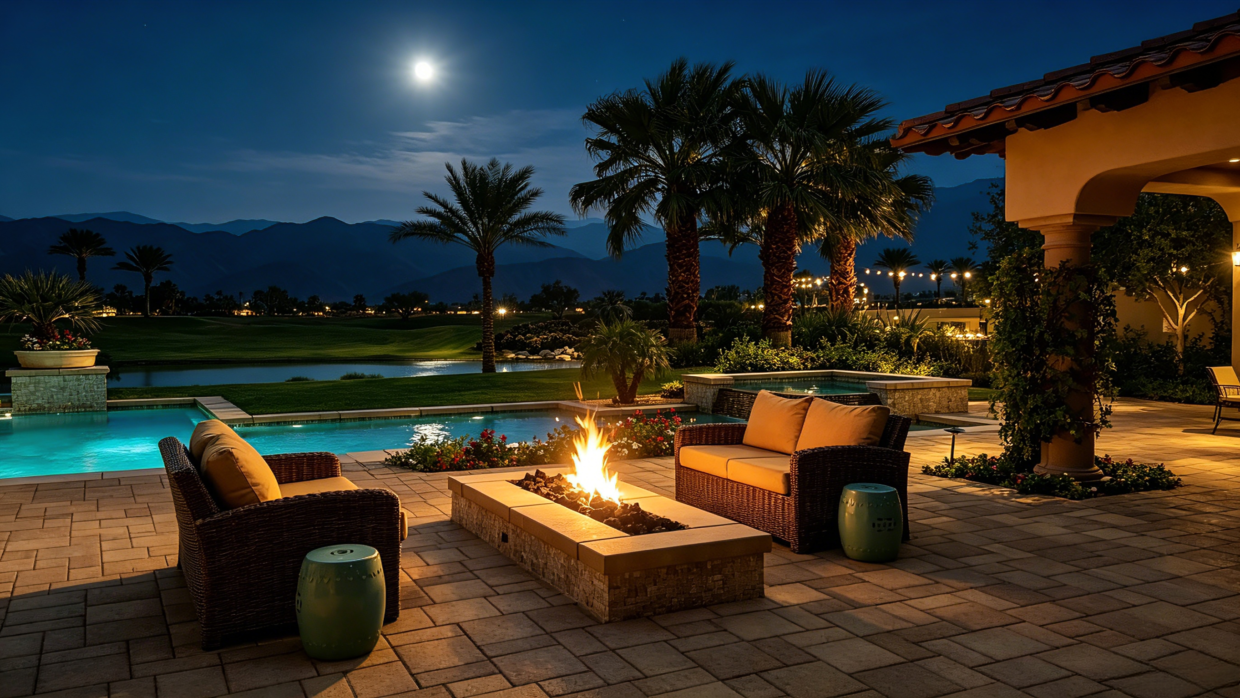
A fire feature should not feel like an afterthought. We design sunken fire pits to create a cozy, “conversation pit” feel, or elevated fire tables that serve as the anchor for a lounge area. In 2026, we are seeing a trend toward “linear fire walls” that act as both a source of warmth and a privacy screen. The choice of media—lava rocks, fire glass, or ceramic logs—should complement your overall hardscape. For example, blue fire glass adds a modern, crystalline look to a poolside patio, while volcanic rock provides a more rugged, naturalistic feel for a wooded garden.
Maintenance and Off-Season Protection
To ensure your fire feature lasts for decades, proper maintenance is vital. For gas units, burner orifices must be checked annually for spider webs or debris that can cause uneven flames. For wood units, ash should be removed regularly to prevent moisture buildup, which can corrode the metal base. Regardless of the fuel type, a high-quality, weatherproof cover is the best investment you can make. It protects the components from rain, snow, and UV damage, ensuring that your fire feature is ready to light the moment the first chill of autumn hits.
Switched from wood to gas two years ago and have not looked back. No more dragging and stacking wood, no cleanup, instant flame. Perfect for spontaneous evenings.
The 10-15 foot clearance requirement is critical and people consistently underestimate it. I have seen a deck catch fire from embers placed too close. Please take this section seriously.
The double-wall airflow in the smokeless wood pit is genuinely impressive. Sat around ours for three hours and zero smoke in our eyes. The price premium is absolutely justified.
The sunken fire pit conversation pit design is one of my all-time favorites. It creates such an intimate gathering space. We have had some of our best evenings around ours.
The spider web in burner orifice tip is something I learned the hard way. First autumn fire of the season, uneven flame until I found the blockage. Annual check is now on my calendar.
Blue fire glass around a poolside patio is absolutely stunning. Installed it two years ago and guests always comment on it first thing. The visual effect at night is incredible.