



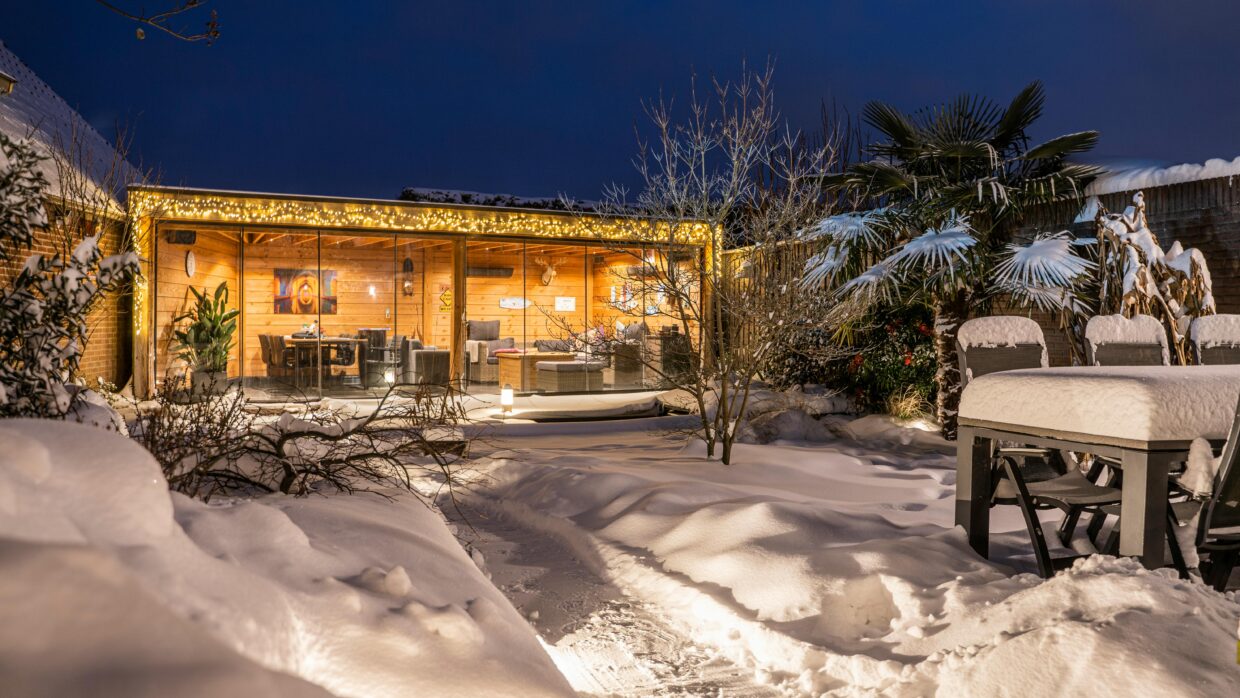
Winter is the ultimate test of a landscape’s resilience. As temperatures drop in late 2026, the risk to your botanical and structural investments increases exponentially. Frost can kill sensitive perennials, and frozen water can devastate expensive irrigation systems and hardscaping. At TopHomeServics, we provide a “Winterization Shield” service designed to wrap your garden in a layer of protection that ensures a vibrant return in the spring. Being proactive in November is the difference between a thriving April garden and a costly replanting project.
Protecting the Root Zone and Sensitive Flora
The most dangerous element of winter is not just the cold, but the “freeze-thaw” cycle that can heave plants out of the ground. We recommend a 3-inch layer of high-quality organic mulch around the base of all trees and shrubs. This acts as a thermal blanket, stabilizing soil temperatures. For delicate species, we utilize breathable burlap wraps or “frost blankets” that protect foliage from desiccating winter winds while still allowing air circulation. In 2026, we are also applying anti-desiccant sprays to evergreens, which create a microscopic waxy film to prevent moisture loss when the ground is frozen and roots cannot take up water.
Infrastructure Safety: Irrigation Blow-Outs
Your irrigation system is your most vulnerable winter asset. Even a small amount of water left in a PVC pipe or a brass valve can expand with enough force to shatter the component. Our mandatory winterization protocol involves an “air blow-out,” where high-volume, low-pressure air is used to purge every drop of water from the lines, valves, and sprinkler heads. This is paired with the insulation of backflow preventers and the draining of outdoor pumps. By protecting these mechanical components, and securing your gutter systems, you avoid the common spring nightmare of hidden underground leaks and broken irrigation controllers. For more tips on exterior protection, the FEMA winter weather guide provides excellent supplementary checklists.



The anti-desiccant spray on evergreens is something I only discovered two winters ago. Game changer. My boxwoods used to turn brown every February. This year they stayed perfectly green throughout.
The 3-inch mulch layer around tree bases is a simple tip but incredibly effective. Been doing it for five years and have never lost a single plant to a late frost. It really does act as a thermal blanket.
The freeze-thaw heaving point is critical. Lost two ornamental grasses to heaving before I understood the mechanism. Proper mulch depth and planting depth solved it completely the following season.
The air blow-out protocol described here is standard professional practice. What I would add: always test the system in early spring before the first run to catch any hairline cracks that developed over winter.
I was skeptical about burlap wraps until I wrapped my Japanese maple for the first winter and compared it to an unwrapped specimen in the same bed. The difference in spring emergence was dramatic.
The backflow preventer insulation point is often skipped. I have replaced two of them after they cracked over winter. A $15 foam cover literally saves a $200 repair every spring. Worth every second.